
How Do We Read Abstract Painting?— After thedisappearance of stories and images, how do we recognize structure, energy,and attention?
March 2, 2026
Standing before an abstract painting, the most common question is:
“What is this supposed to be?”
This question assumes that painting should correspond to a recognizable object. Yet since the maturation of photography, painting’s function of “representing the world” has gradually shifted. It began addressing something else: the invisible structure.
I. Abstract Painting Is Not “Without Content”

In the early twentieth century, several artists made a fundamental shift:
- Hilma af Klint (1862–1944) translated spiritual structures into geometric imagery.
- Wassily Kandinsky (1866–1944) used color and line to correspond to musical rhythm.
- Piet Mondrian (1872–1944) no longer painted flowers, but the order between vertical and horizontal lines.
- Barnett Newman (1905–1970) explored existence and the sublime through vast color fields and vertical lines.
They did not abandon content; they compressed it into structure, rhythm, tension, and state. Abstract painting is not empty—it is highly condensed.
When imagery is compressed, the mode of viewing must also change. We no longer percieve the painting through narrative, but through relationships and differences.
II. Understanding Order Begins with Recognizing Different Structures
The differences in abstract painting arise from structural arrangement.
1. Decentered Structure: Continuous Movement of the Eye

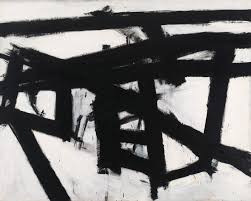
In paintings by Jackson Pollock (1912–1956) and FranzKline (1910–1962), a single focal point is deliberately weakened. Energy spreads across the entire surface; the viewer’s gaze moves continuously across the canvas, it’s like reading or following a motion.
2. High-Density Space: Compressed Energy
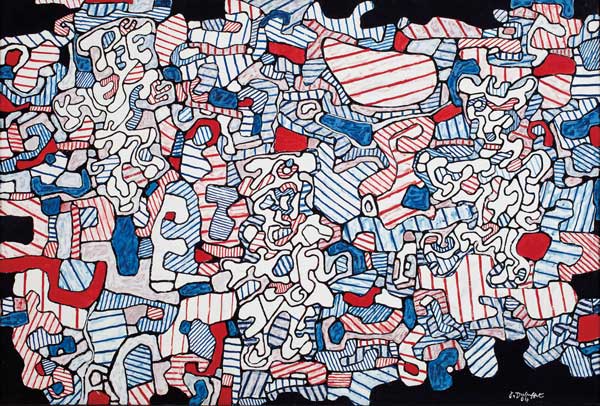
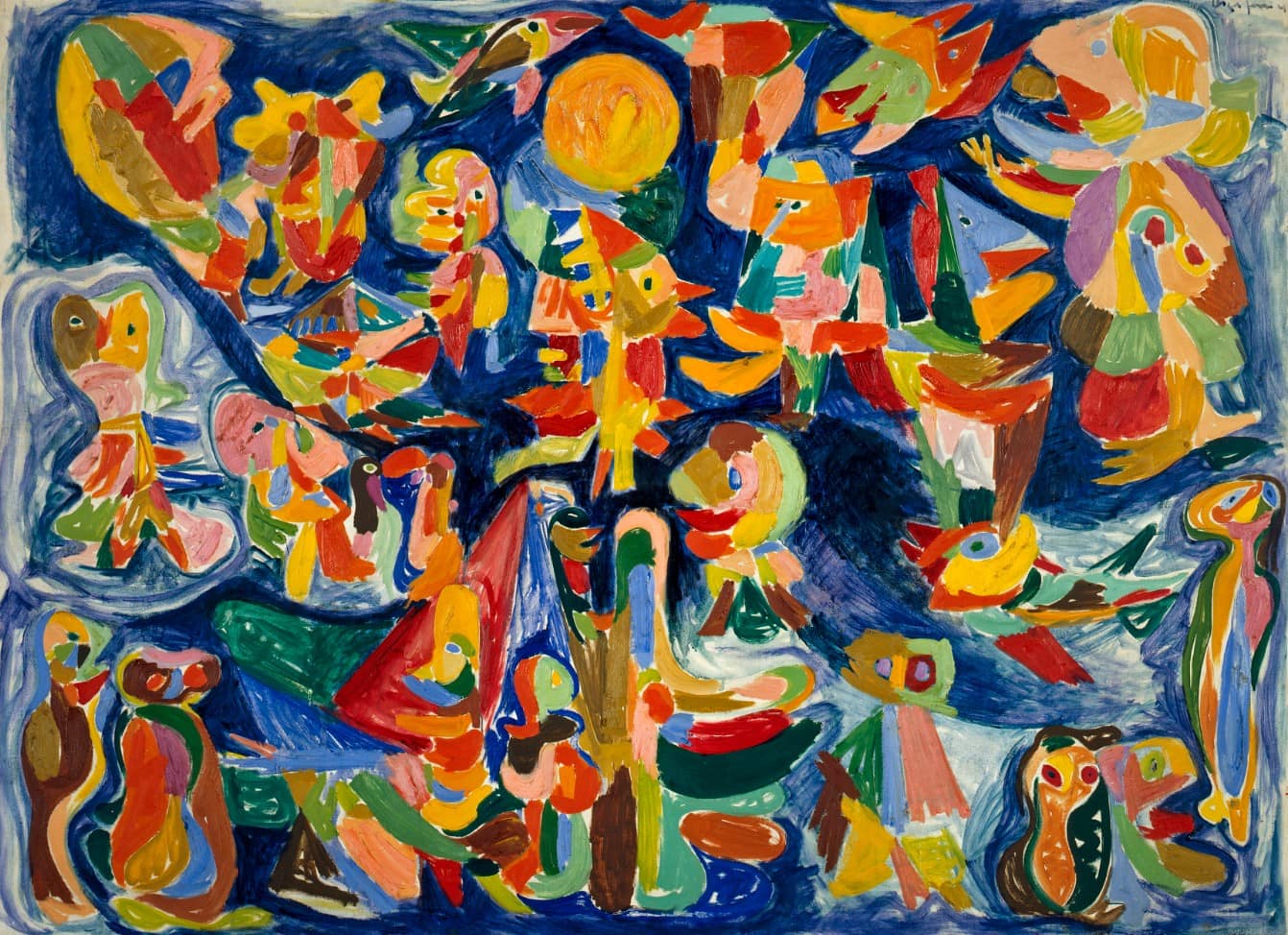
In the paintings by Jean Dubuffet (1901–1985) and AsgerJorn (1914–1973), there is an increase on subjects that are comprassed to each other. Viewing becomes intimate and tactile rather than expansive. These paintings invite the viewers to percieve details rather than experiencing the painting as a whole.
3. Homogeneous Spread: An All-Over Energy Field


In the works by Mark Tobey (1890–1976) and Yayoi Kusama (1929– ), the surface is evenly distributed; each area holds comparable importance. Viewing becomes a comprehensive sweep rather than a fixed focus.
Different structures create different viewing experiences:
A center stabilizes the gaze.
Looseness sets it in motion.
Density brings it closer.
In the absence of narrative, abstract painting designs the rhythm of perception through structure.
III. How Do We Read the Abstract Paintings of Pascal van der Graaf?
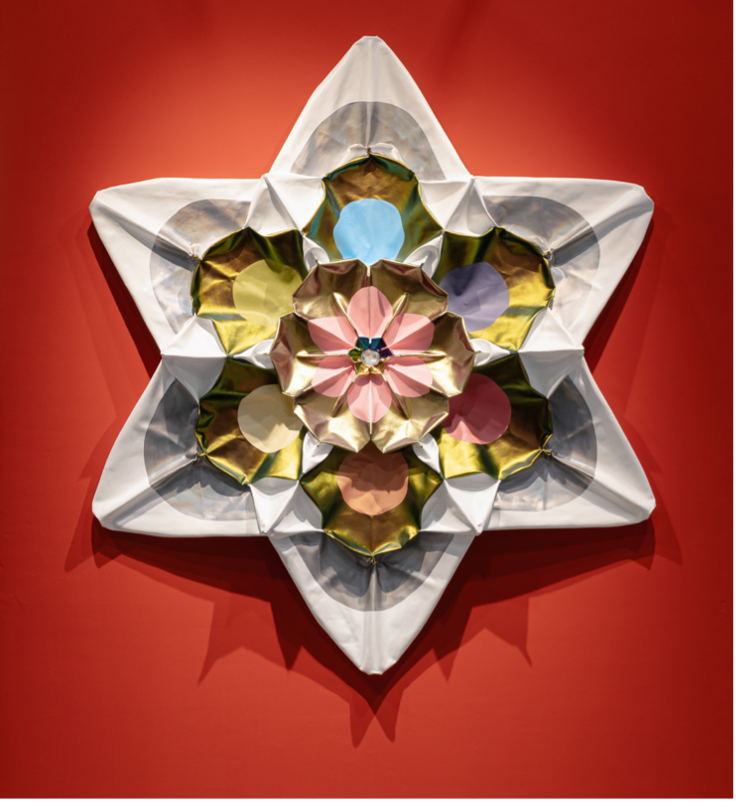
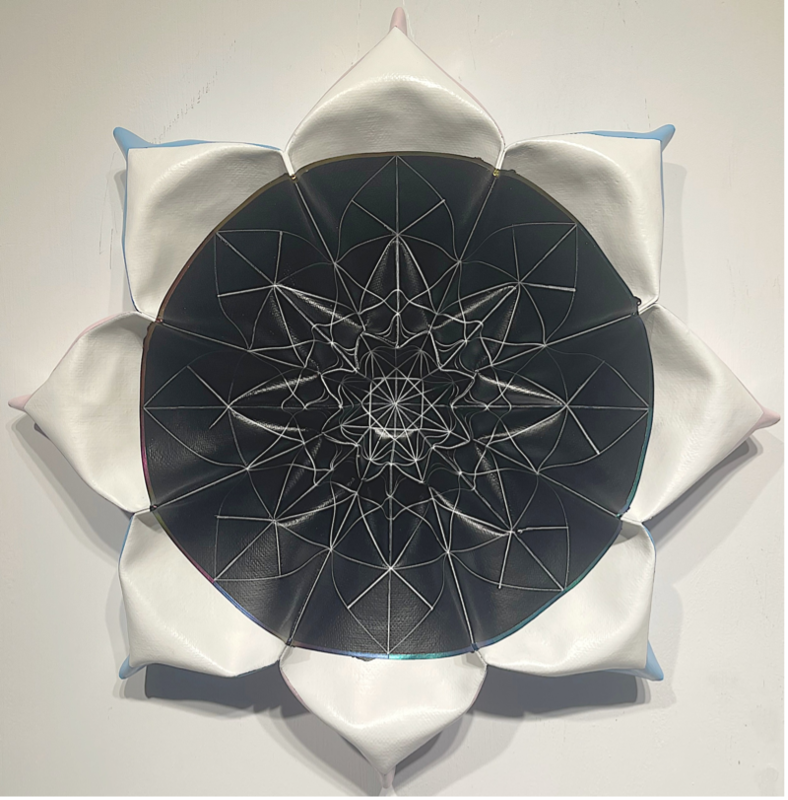
If abstract painting arranges structure to guide perception, then the work of Pascal van der Graaf (1979– ) approaches structure as generation and modulation. His paintings possess a stable center, controlled tension, and a breathable spatial distribution. When directional energy is clear and elements form stable relationships, viewing time naturally extends—the painting begins to guide the act of looking.
Central and Peripheral Vision
When discussing the relationship between his practice and cultivation, Pascal noted a key point: when the gaze concentrates on the center of the image, peripheral vision begins to process the whole.
Human vision includes:
- Central vision — responsible for detail recognition
- Peripheral vision — sensitive to overall energy and spatial relations
When the center is established and the gaze stabilizes, peripheral vision simultaneously captures the angles created by folded planes, the subtle vibration of light along edges, and shifts of color within the structure. Gradually, the painting forms a sense of field.

This mechanism parallels the structure of the mandala. A mandala functions as a meditative tool not because of mysticism, but because a stable center and symmetrical order naturally guide attention. Although Pascal’s works are not religious images, their structures similarly shape perception through the interaction between center and periphery.
Folding and Time
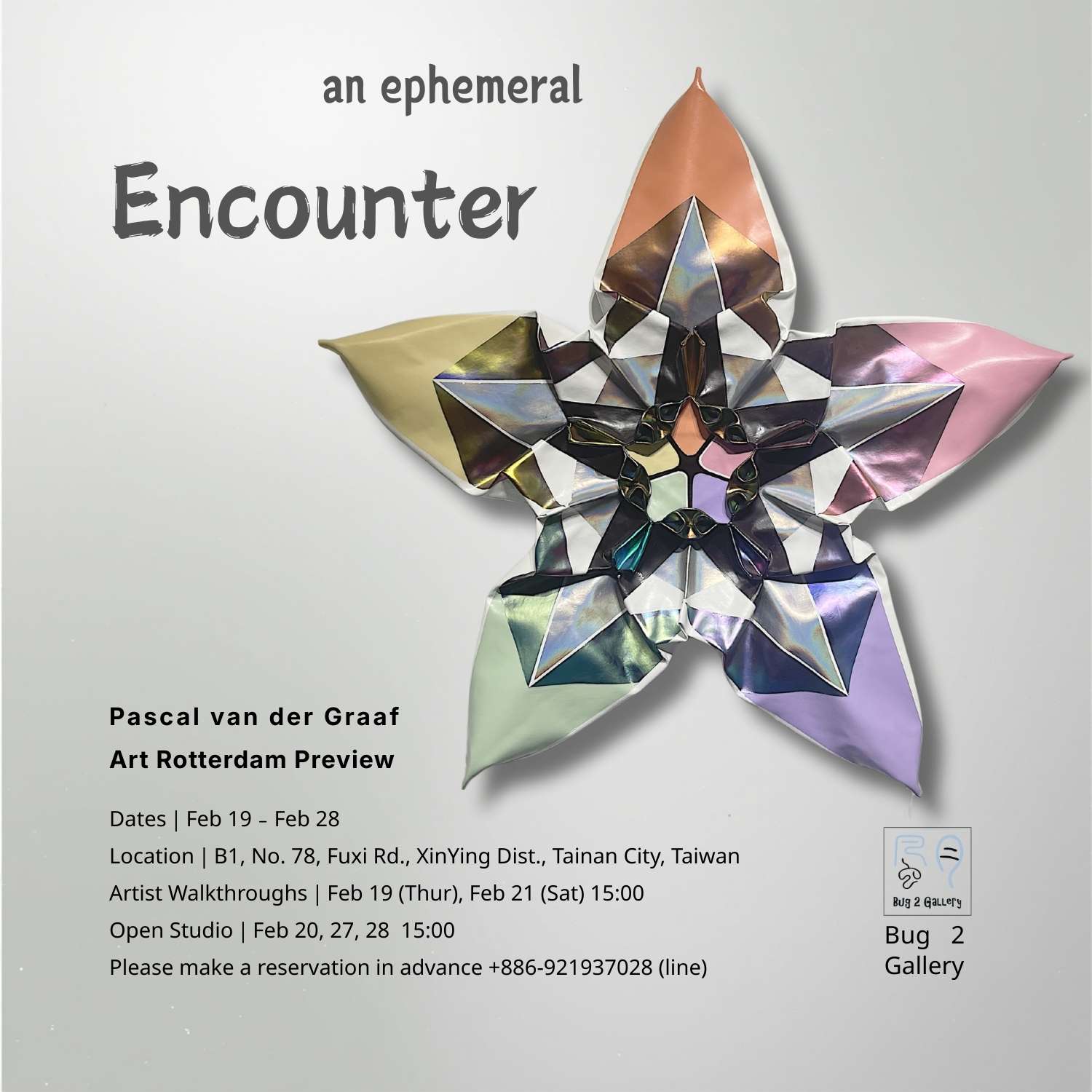
The folded canvas directs energy inward; tension is regulated rather than released outward. The use of iridescent automotive paint allows the surface to shift with the viewing angle, incorporating time into the act of looking. The work does not exhaust itself at first glance—it unfolds through sustained attention.
Compared to Pollock’s outward expansion or de Kooning’s tearing tension, Pascal’s paintings incline toward inward concentration. They demand stability and focus.
Conclusion
Abstract painting does not provide stories—it provides structure.
When a center is established, energy gathers; when tension is regulated, viewing endures.
The relationship between Pascal van der Graaf’s abstractionand cultivation does not lie in religious symbols, but in the mechanics of perception itself—how attention is guided, how structure shapes awareness.
At that moment, viewing is no longer simply understanding. It becomes a state.
%20cyanoacrylate%2C%20enamel%20and%20spraypaint%20on%20canvas%2063%20x%2059%20x%209%20cm%2005.jpg)
.jpg)