
If the Spiritual Can Be Depicted: A Century-Long Journey of Abstraction and Pascal’s Eastern Transformation
February 23, 2026
Landscapes and appearances can be clearly represented—but what about the soul?
How do we depict inner emotion, cosmic order, or a spiritual state?
The nineteenth century was the age of the Industrial Revolution. Steam engines, railways, and urbanization reshaped the relationship between humans and nature; scientific rationality gradually overshadowed religious authority; Darwin unsettled the doctrine of creation. The world seemed clearer—and colder.
At the same time, photography emerged and matured. When the camera could more accurately reproduce what the eye sees, what remained for painting?
In this civilizational transition, artists began to ask another question:
If the world was no longer interpreted primarily through religion, might there exist a “hidden spiritual order”?
If visible representation had been taken over by photography, could the invisible be depicted?
Abstract art was born in this moment of cultural rupture and inquiry.
I. Spiritual Anxiety in the Industrial Age: The Return of Esoteric Thought
In the late nineteenth century, Helena Petrovna Blavatsky (1831–1891)—born into a Russian aristocratic family, widely traveled in India, Egypt, and Tibet, relocated to the United States in 1873, founded the Theosophical Society in New York in 1875, and later settled in London in the 1880s—established Theosophy. She proposed that the universe is structured by a hidden spiritual order, and that through symbols and geometry humanity could gradually comprehend this structure.
Her book The Secret Doctrine circulated widely in European intellectual and artistic circles. Among its core ideas:
- The visible world is a projection of a higher spiritual structure.
- The universe unfolds according to an evolutionary spiritual order.
- Geometry and symbolic form can reveal universal truth.
Although the Theosophical Society was founded in New York, it was London—and by extension Paris—that enabled these ideas to spread throughout Europe’s artistic centers. Here, the seeds of abstraction were planted.
II. Before the Wars: Abstraction as Cosmic Order
1. Hilma af Klint: Spiritual Images on the Eve of War

Hilma af Klint (1862–1944)—born in Sweden, involved in spiritualist and Theosophical circles from a young age, began her abstract series in 1906, producing 193 works in The Paintings for the Temple, mapping spiritual evolution of stages of human life through spirals, ovals, floral motifs, letters and symbols. In 2018, the Solomon R. Guggenheim Museum in NewYork mounted the retrospective Hilma af Klint: Paintings for the Future, drawing over a million visitors.
Created on the eve of global conflict, her paintings appear like diagrams from another dimension. This generation of abstraction was a spiritual response to industrialization and looming war.
2. Wassily Kandinsky: The Vibration of the Spiritual
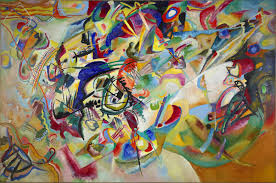
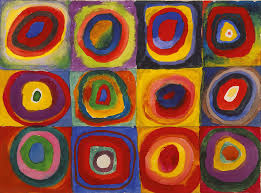
Wassily Kandinsky (1866–1944)—born in Moscow, moved to Munich in 1896, published On the Spiritual in Art in 1911, later taught at the Bauhaus from 1922. On the eve of the First World War, Kandinsky wrote: “Color is the keyboard, the eyes are the hammers, the soul is the piano with many strings.”
He regarded abstraction as a spiritual language, exploring the relationship between color, form, music, and inner emotion. In the face of industrial mechanization, he asserted that inner vibration still existed—fundamentally transforming painting’s language and purpose in the early twentieth century.
3. Piet Mondrian: Order Against Chaos
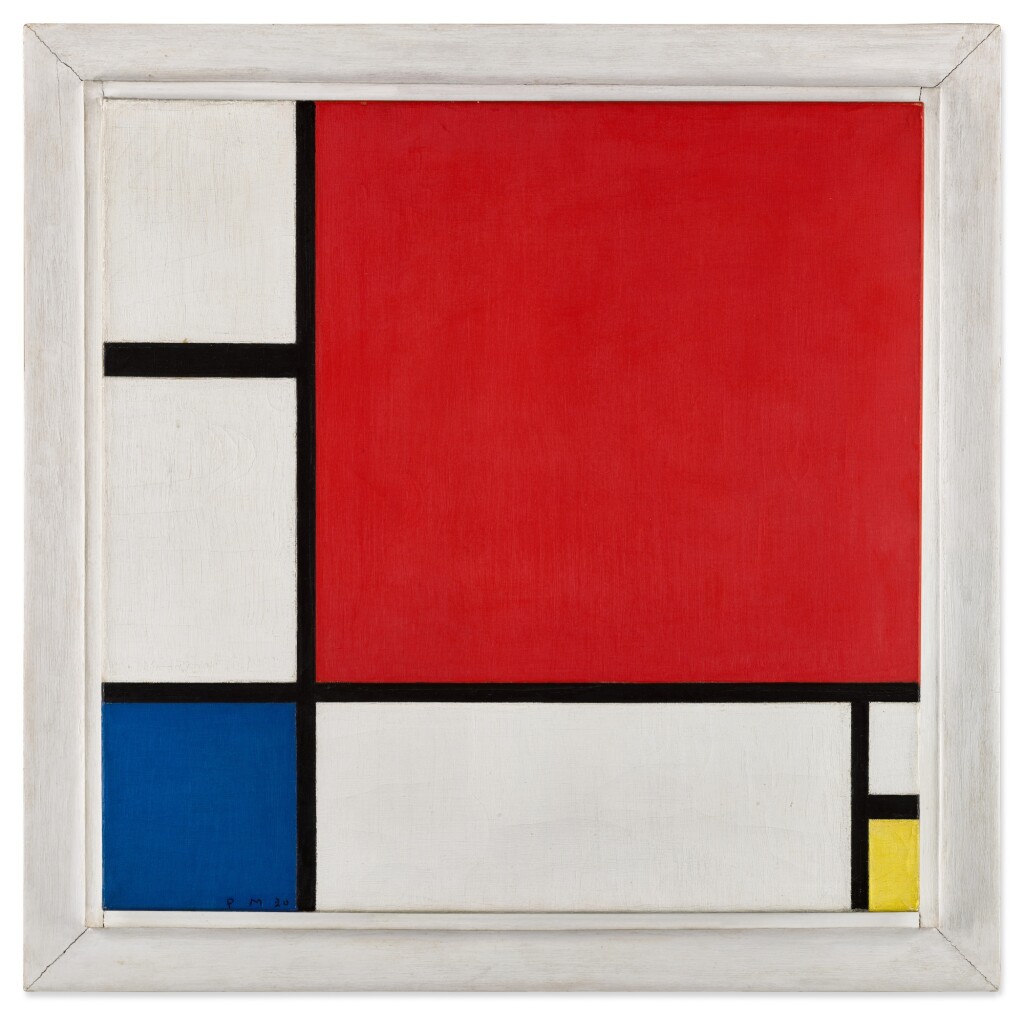
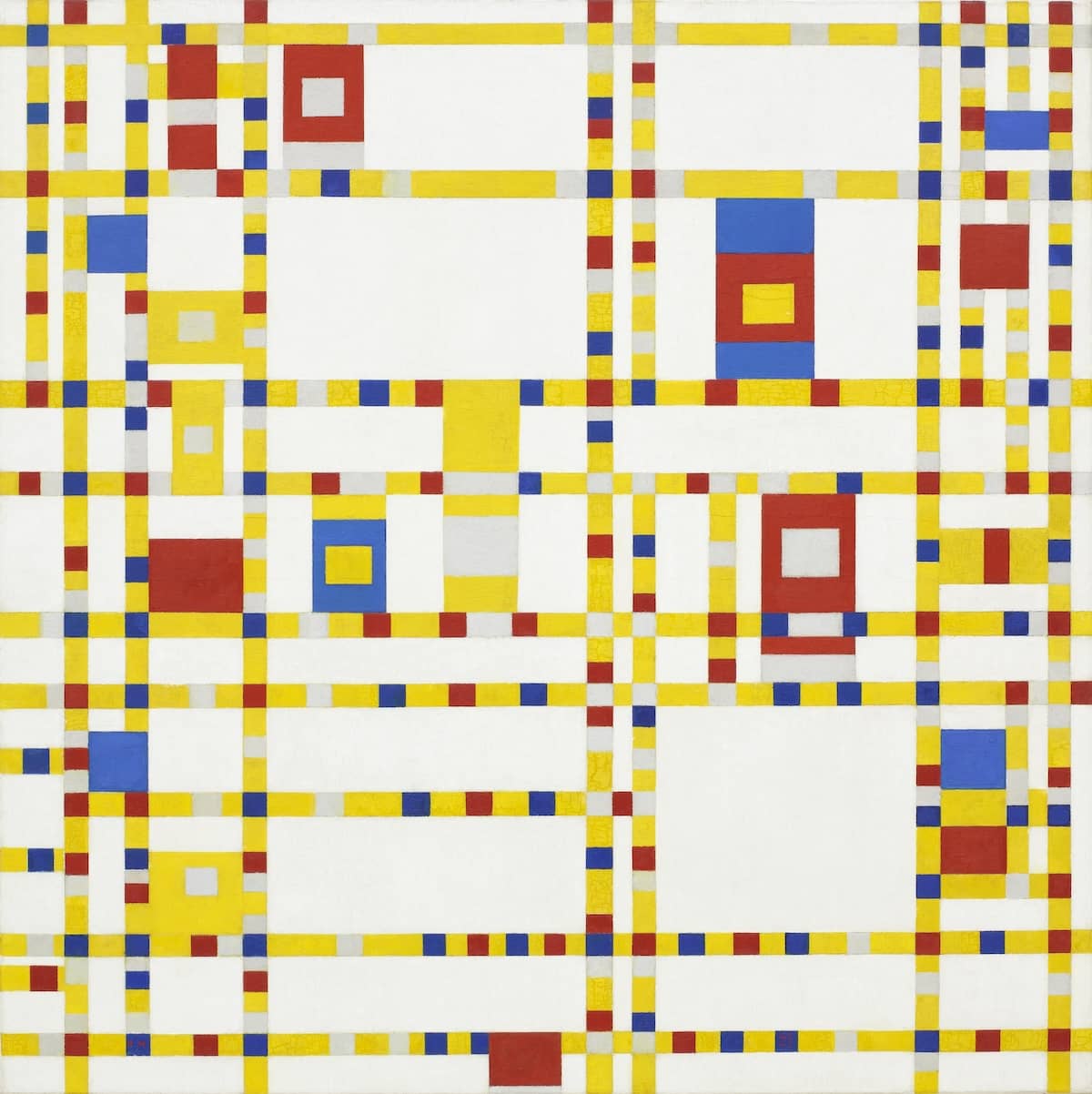
Piet Mondrian (1872–1944)—born in the Netherlands, moved to Paris in 1912, co-founded the De Stijl movement in 1917, relocated to New York in 1940 due to war. In a time of European upheaval, Mondrian chose radical reduction. Through Neoplasticism, he employed vertical and horizontal lines to signify universal dualities—dynamic/static, ascending/extending, spiritual/material—and primary colors to express essential purity. His works sought to construct spiritual equilibrium within a fractured world.
III. After Two World Wars: Abstraction as an Existential Question
The two World Wars fundamentally altered the spiritual direction of abstraction. If early twentieth-century abstraction still believed in an underlying cosmic order—through Theosophy, geometry, or chromatic vibration—postwar artists struggled to sustain that faith.
Concentration camps and atomic bombs rendered words like “progress,” “order,” and “reason” fragile. The question was no longer how the universe is structured, but:
How does a human being exist in a fractured world?
Abstraction shifted from cosmic blueprint to existential experience.
1. Barnett Newman — The Sublime and Human Scale
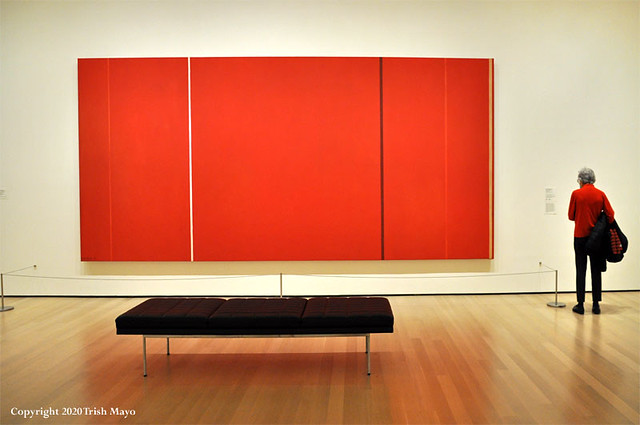
Barnett Newman (1905–1970)—born in New York, developed the “Zip” motif in 1948, became a central figure of Abstract Expressionism in the 1950s.
He argued that art should pursue not beauty but “The Sublime.” For Newman, the sublime was not religious spectacle, but the experience of confronting infinity. The vertical “Zip” in his vast color fields is not decoration but a marker of existence. Abstraction here no longer depicts cosmic order; it stages an encounter with being.
2. Mark Rothko — Fundamental Human Emotion
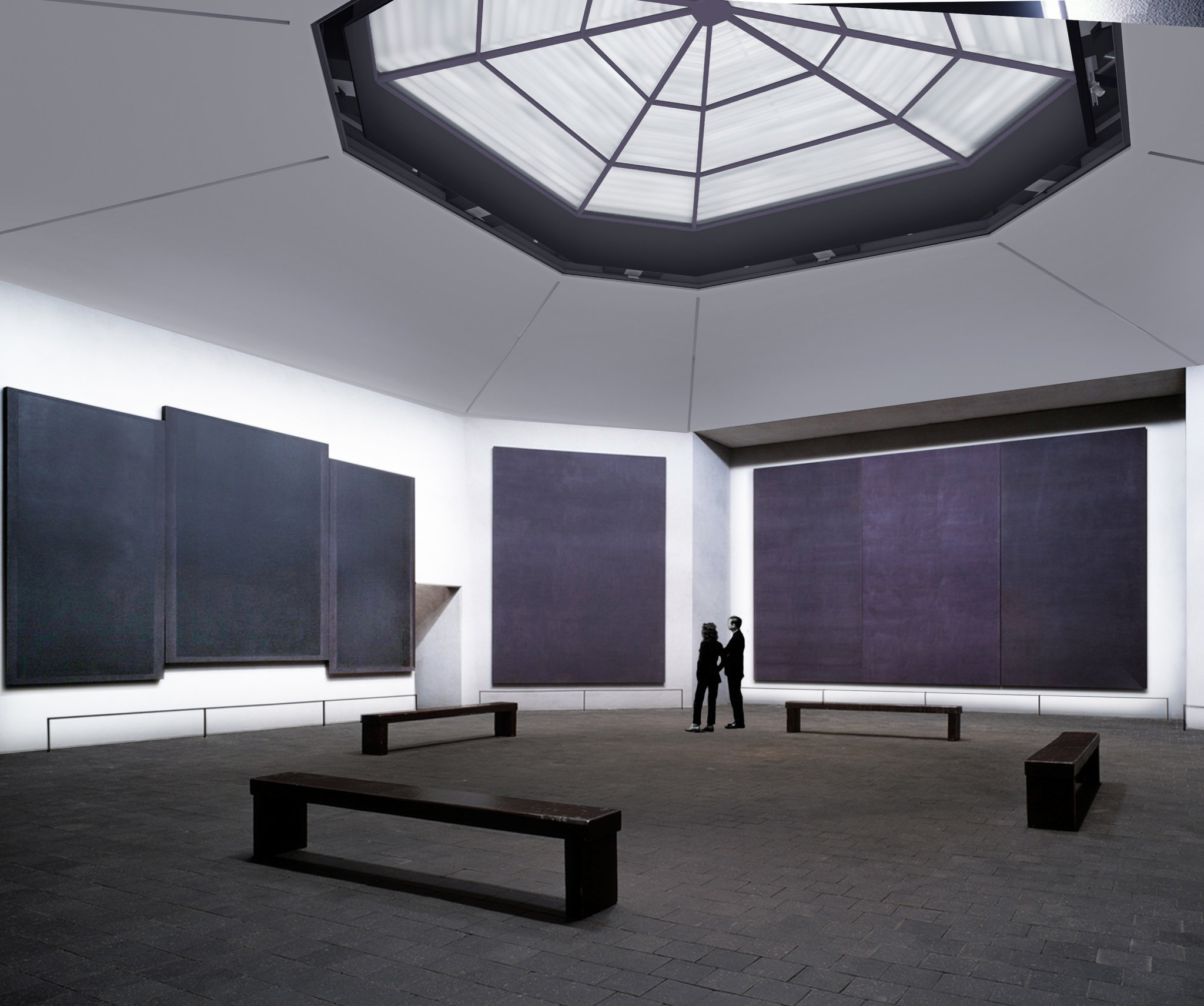
Mark Rothko (1903–1970)—born in present-day Latvia, emigrated to the United States in 1913, developed color field painting in the late 1940s. Rothko transformed abstraction into a contemplative environment. He insisted he was not interested in abstraction per se, but in expressing “basic human emotions—tragedy, ecstasy, doom.” His color fields envelop the viewer’s vision, forming a silent psychological space. Abstraction here becomes the minimal form of emotional intensity—an inward response to existential void.
Abstraction no longer explains the universe; it makes us aware of being present.
IV. The Twenty-First Century: Pascal Between West and East

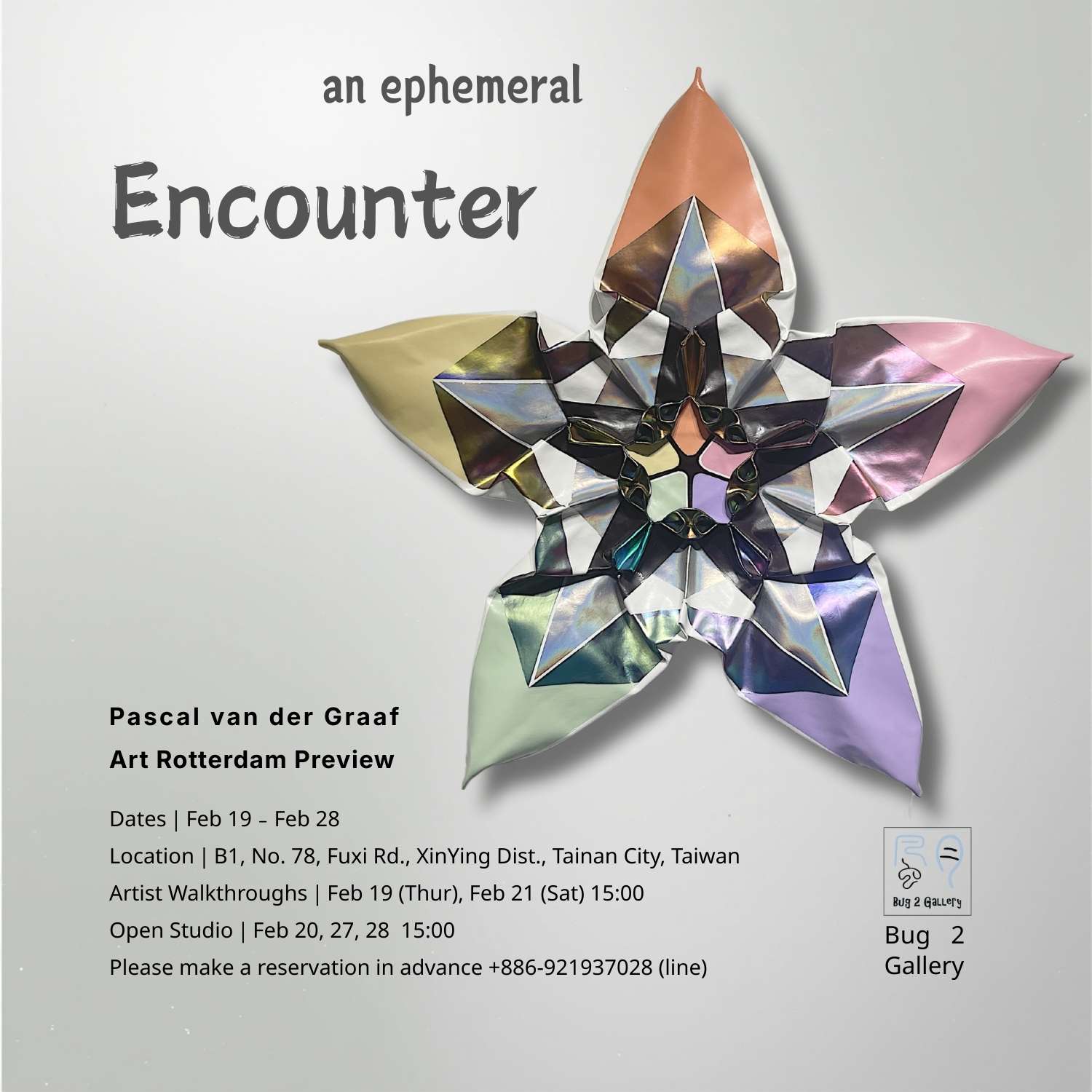
Pascal van der Graaf (b. 1979, Dordrecht, Netherlands; relocated to Taiwan in 2016) grew up within a mature postwar abstract tradition. For him, abstraction was initially an inherited artistic language.
In Taiwan, however, he encountered a different sensibility—where “qi” and energy are not metaphors but lived concepts. This shifted his practice from figurative representation toward the expression of bodily and spiritual experience. Abstraction here is no longer solely a structural problem, but an articulation of internal state.
Late nineteenth-century abstraction emerged as a spiritual response to industrial civilization;
postwar abstraction became an exploration of existential trauma;
in the twenty-first century, through Pascal’s work, abstraction becomes across-cultural practice—an integration of structure, perception, and lived experience.
%20cyanoacrylate%2C%20enamel%20and%20spraypaint%20on%20canvas%2063%20x%2059%20x%209%20cm%2005.jpg)
.jpg)