
When a Painting Refuses to Behave: From the “Shaped Canvas” to Pascal’s Structural Turn
February 16, 2026
If we want to situate Pascal van der Graaf within art history, the keyword is clear: “Shaped Canvas.”
But this term is not about decorative form. It represents a fundamental question: What is painting?
I. 1964 — What Happened at The Shaped Canvas?
In 1964, the Solomon R. Guggenheim Museum in New York presented an exhibition titled The Shaped Canvas, curated by Lawrence Alloway (1926–1990, born in the UK, later active in New York as a critic and curator).
The exhibition did not invent shaped painting — it gave a name to something already emerging.
It posed a simple but radical question: Does a canvas have to be rectangular?
The rectangle seems neutral. In fact, it is highly structured. It predetermines:
- how we compose
- how we read space
- how we understand visual order
When artists altered the outer contour of the canvas, they were not redesigning surfaces. They were challenging the rules themselves.
The shaped canvas was not stylistic variation. It was structural dissent.
II. Frank Stella: Refusing Illusion
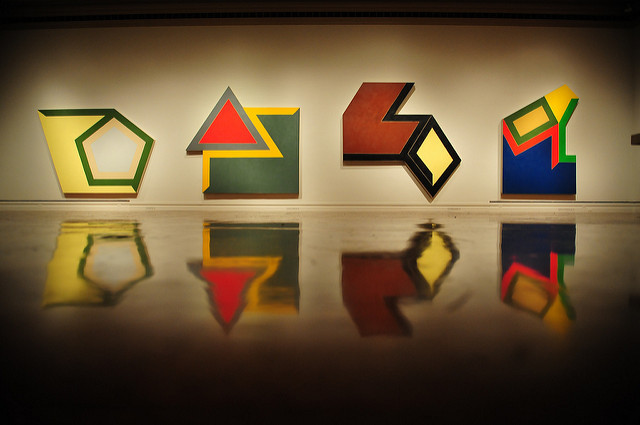
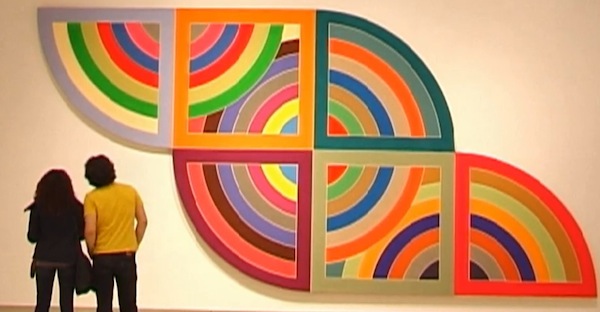
Frank Stella (1936–2024, born in Massachusetts; active in New York in the late 1950s–60s) famously declared:
“What you see is what you see.”
This was not a casual remark. It was a rejection of illusionistic space.
After Abstract Expressionism had pushed emotional depth and spatial drama to their limits, Stella chose not to create “space” that did not physically exist.
In Irregular Polygons (1965–66), the contour of the canvas determines the composition.
In the Protractor Series (1967–71), color and curved structure eliminate perspectival illusion.
The painting does not open into space — it remains an object. He did not add content. He removed illusion. And removal is often harder than addition.
III. Ellsworth Kelly: Shape as Being


Ellsworth Kelly (1923–2015, born in New York State; lived in Paris 1948–1954 before developing his mature language in New York) approached the issue even more directly:
If painting is reduced to color and shape — why retain the rectangle?
In Yellow Piece (1966), the entire canvas becomes a single form. It does not depict shape. It is shape.
If Stella rejected illusion, Kelly dismantled composition.
When the rectangle disappears, painting is no longer an image inside a frame. It becomes a presence on the wall.
IV. When the Canvas Enters Space
.jpg)
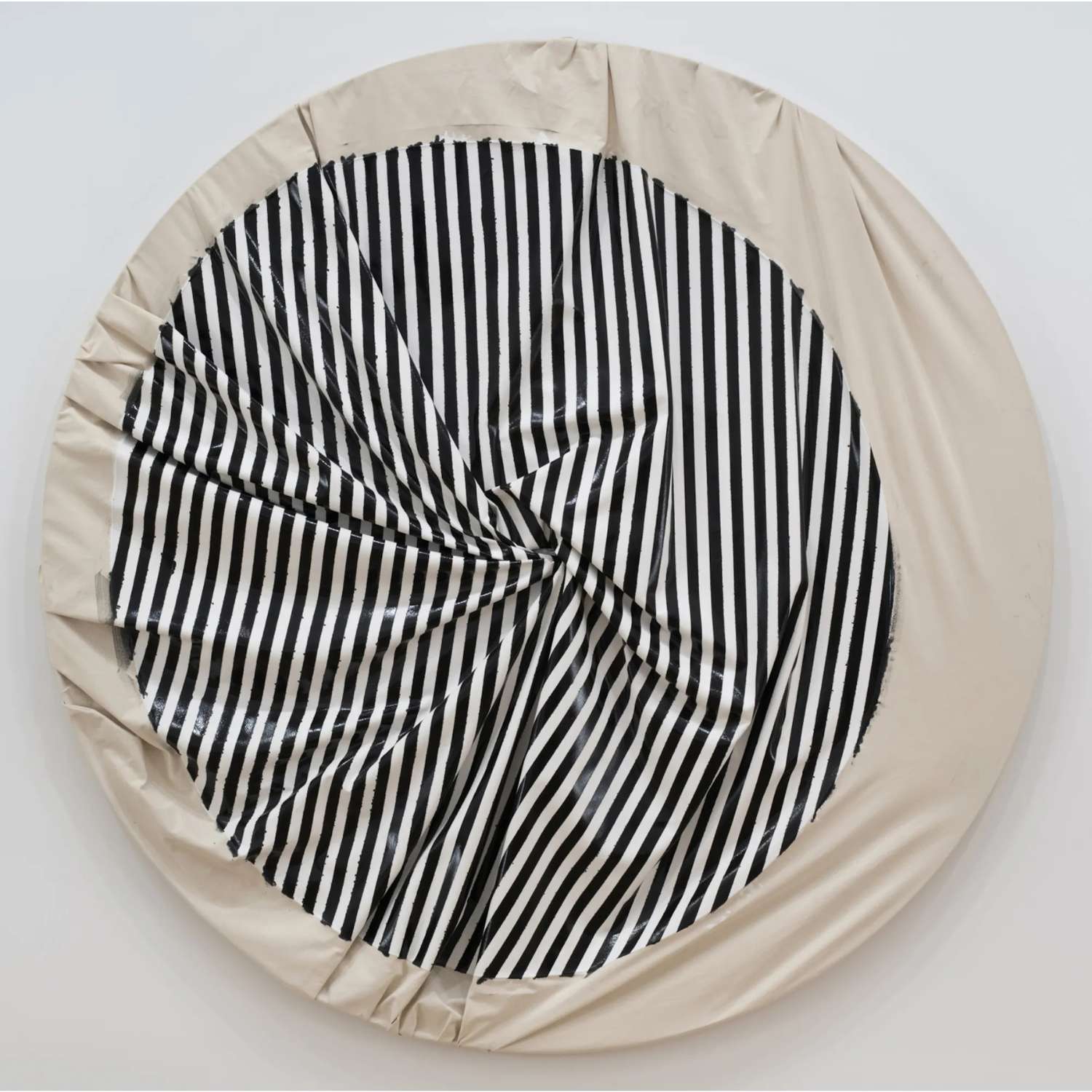
After the 1960s, some artists went further.
Charles Hinman (b. 1932, New York) created works that physically project from the wall. Painting ceased to be a flat surface and became a constructed structure.
Later, Steven Parrino (1958–2005, born in New York) twisted and compressed stretched canvases, transforming painting into a tense, sculptural object.
Different methods. One shared concern: Painting no longer pretends to contain space. It becomes space.
V. Lucio Fontana: Opening the Surface
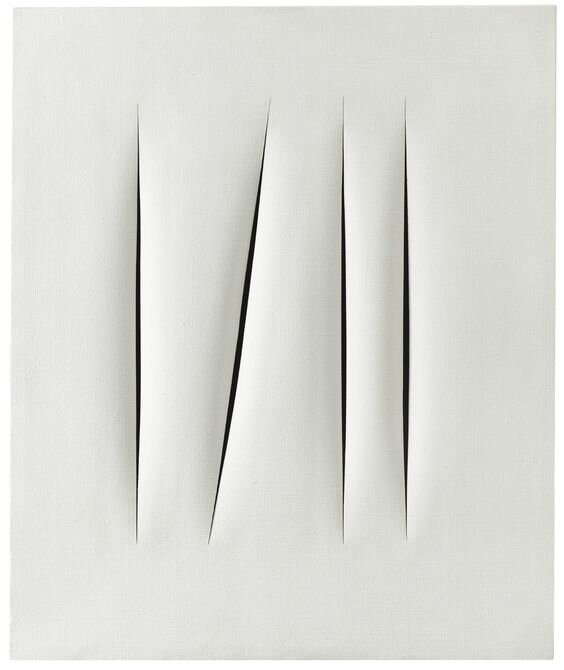
Lucio Fontana (1899–1968, born in Rosario, Argentina; active in Italy and founder of Spatialism) began cutting canvases in 1958.
He did not alter the outer shape of the painting. Instead,he sliced through it. Real space penetrated the surface.
Fontana is not strictly a shaped-canvas artist, but he confronted the same question:
Is painting a plane —
or an opening?
VI. Returning to Pascal: Rethinking the Container
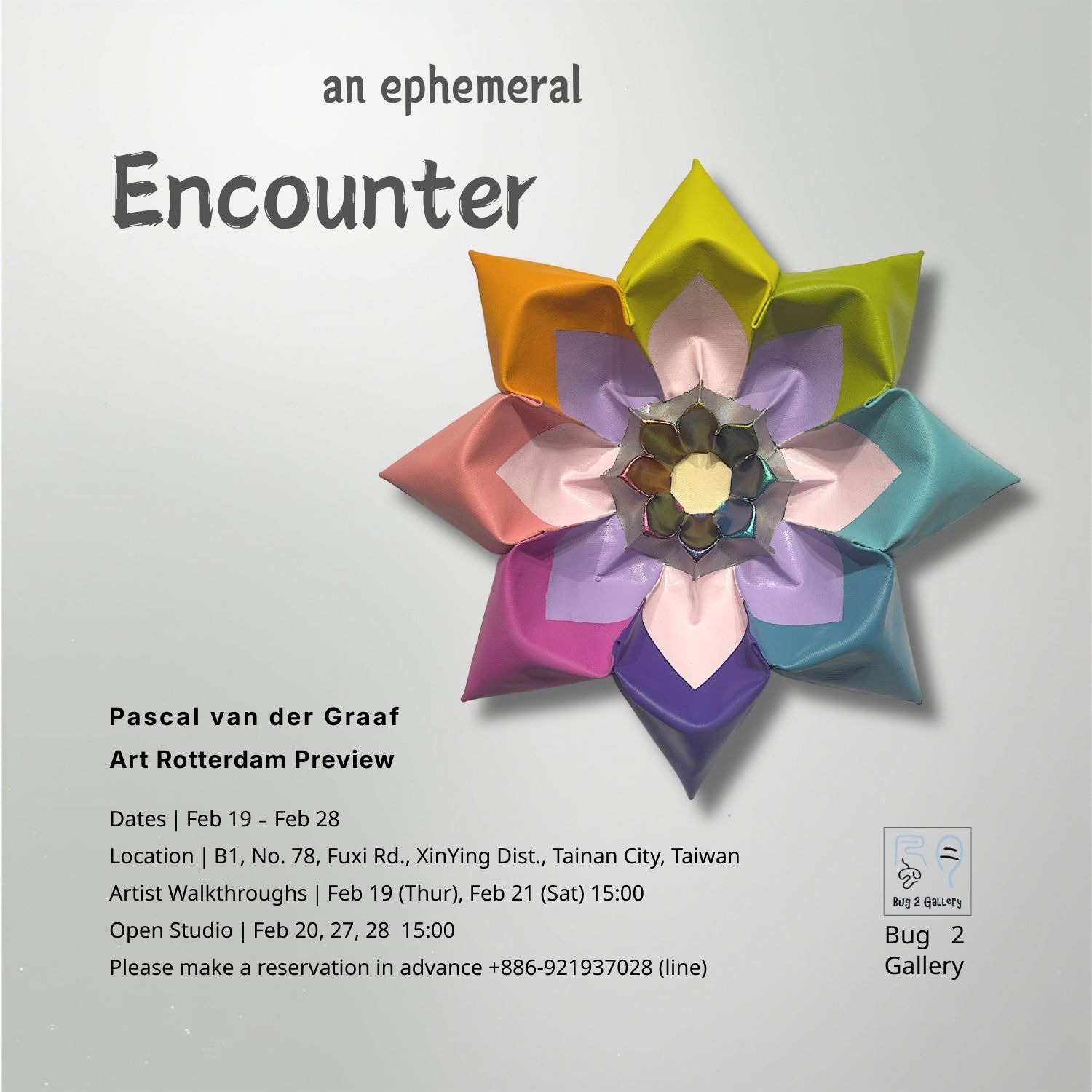
When Pascal decided in 2022 to fold canvas as if it were paper, he was not repeating history. He was extending a trajectory.
Stella rejected illusion.
Kelly made shape primary.
Hinman pushed the canvas into space.
Parrino twisted it into tension.
Fontana cut it open.
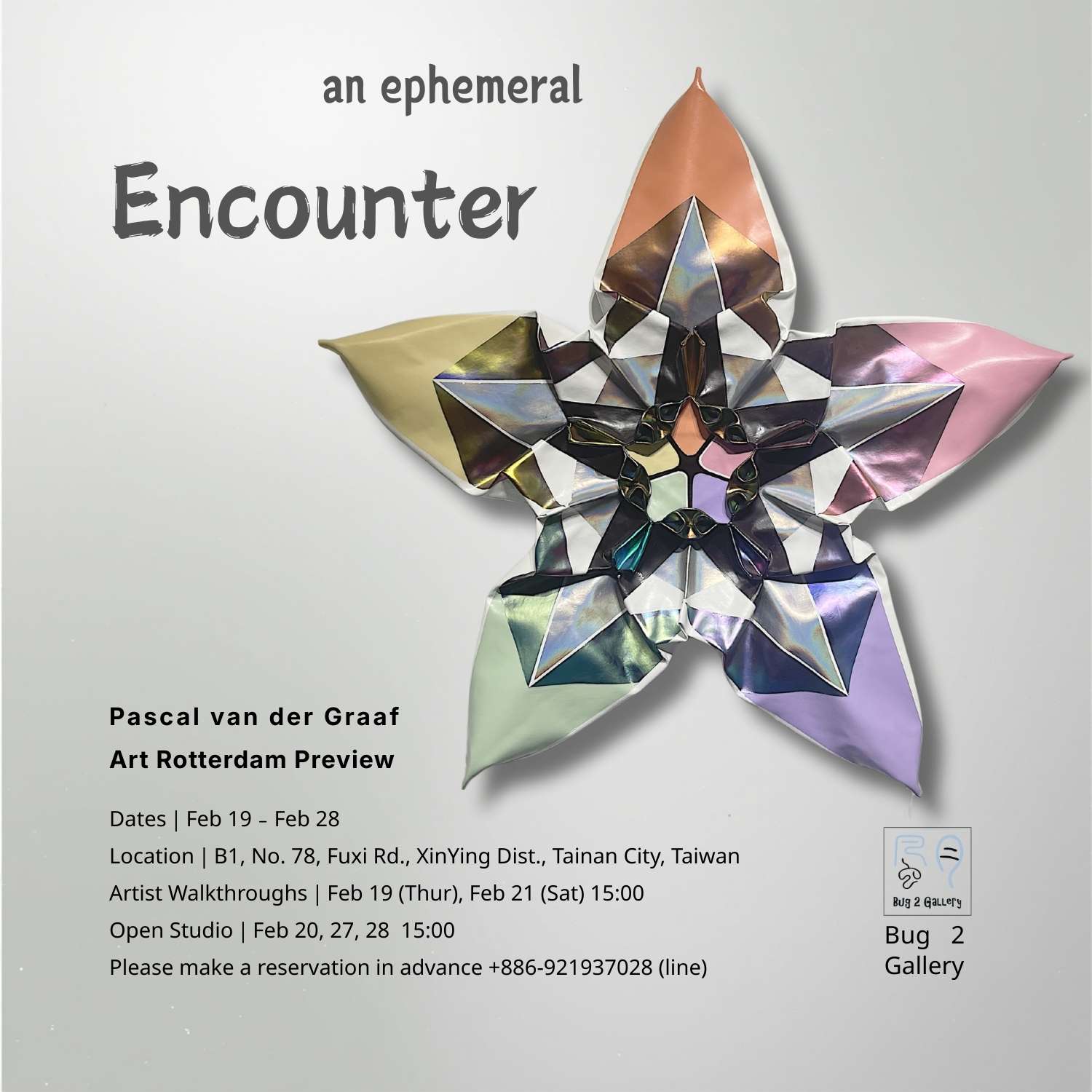
Pascal folds it.
His gesture is neither destructive nor violent. It is structural.
The fold generates volume through tension. The canvas becomes a body shaped before it is stretched. With the addition of automotive color-shifting paint, the viewer’s angle becomes part of the work itself.
This shift may appear formal. In fact, it alters the entire logic of looking.
Visit Information
Dates/ Time: Feb 19–28, 2026, 15:00
Location: B1, No. 78, Fuxi Rd., Xinying Dist., Tainan, Taiwan
Bug 2 Gallery
%20cyanoacrylate%2C%20enamel%20and%20spraypaint%20on%20canvas%2063%20x%2059%20x%209%20cm%2005.jpg)
.jpg)